The Lifetime Investment: Why a Geothermal System Outlives Conventional HVAC
When considering a new heating and cooling system for your home, the upfront cost can often be the first and only thing you look at. However, a truly smart investment goes beyond the purchase price to consider the lifetime value and longevity of the equipment. This is where geothermal heating and cooling systems shine, often lasting two to four times longer than their conventional counterparts.
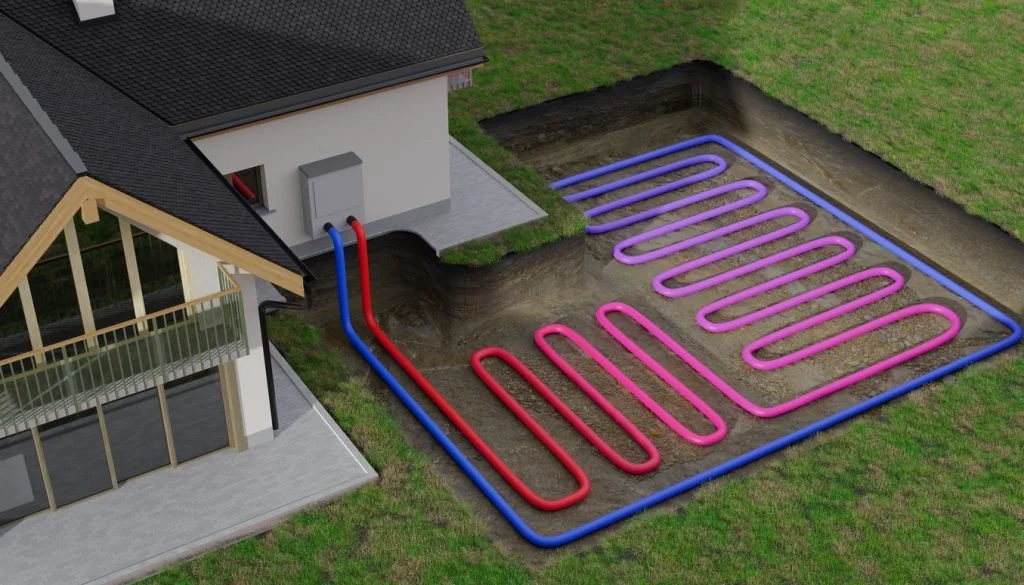
The key to a geothermal system's impressive lifespan lies in its design. It's not one single unit, but two main components: the above-ground unit and the underground loop field.
The Hidden Asset: The Underground Loop Field
The underground component—the loop field—is the part that truly makes geothermal a generational investment.
Protected from the Elements: The piping, typically made of high-density polyethylene, is buried deep beneath the surface. This placement protects it from harsh weather, temperature extremes, vandalism, and the constant stress of expansion and contraction that plagues outdoor air conditioning units.
Decades of Durability: Because the loop is stable and operates in a consistent temperature environment underground, it experiences minimal wear and tear. Experts estimate that a properly installed geothermal loop field can last 50 to 100 years, essentially the lifetime of your home. This means future homeowners will benefit from the initial installation without the need for costly replacement.
The Workhorse: The Indoor Heat Pump Unit
The part of the system housed inside your home—the geothermal heat pump—is also engineered for extended life compared to a traditional furnace or air conditioner.
Consistent Environment: Unlike conventional A/C units and furnaces, which often sit outside and battle the scorching sun, freezing snow, dirt, and rain, the geothermal heat pump is installed in a basement, closet, or utility room. This sheltered, temperature-controlled environment significantly reduces corrosion and mechanical strain.
Gentler Operation: A conventional air conditioner uses an outdoor fan and coil to exchange heat with the highly variable outdoor air. A geothermal heat pump exchanges heat with the constant, moderate temperature of the earth. This more stable and efficient operation results in less stress on the compressor, which is the single most expensive component in any HVAC system.
Expected Lifespan: While a standard conventional air conditioner or heat pump might last 10 to 15 years, a high-quality geothermal heat pump unit typically lasts 20 to 25 years—and often longer with proper maintenance.
Understanding the Cost-Per-Year
When comparing systems, think about the annualized cost.
A conventional system may have a lower initial price, but if it needs to be completely replaced every 12 to 15 years, the cost of purchasing and installing multiple new units over a 50-year period adds up significantly.
A geothermal system, though a higher initial investment, only requires replacing the indoor unit (the heat pump) every 20-25 years. The massive, complex, and expensive outdoor portion—the loop field—is already paid for and operating reliably. The overall cost per year of ownership often ends up being far lower for geothermal, especially when factoring in the substantial energy savings.
The Geothermal Advantage
Investing in a geothermal system isn't just buying a new HVAC unit; it's investing in permanent, future-proof infrastructure for your property. You are purchasing longevity, durability, and a predictable path to energy independence. It is truly a lifetime investment that provides comfort and value for generations.
Need expert advice on your home's heating or cooling system? The certified professionals at Water Source Heating & Cooling are here to help you achieve perfect home comfort and efficiency. Contact us today.