In the Chippewa Valley, our furnaces aren't just about comfort—they are a critical part of home safety. When the temperatures in Eau Claire drop to -20°F in the dead of January, you need to know your heating system can handle the load.
When a furnace starts acting up, every homeowner faces the same stressful question: Do I pay for another repair, or is it finally time to replace the whole unit? This guide will help you navigate that decision with confidence, focusing on the specific climate and financial incentives available here in Wisconsin.
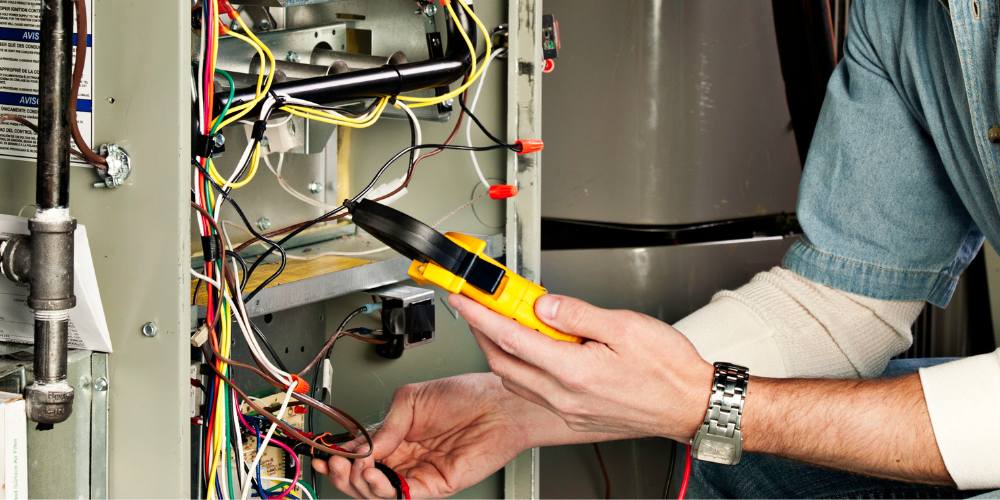
When a Repair is the Right Choice
If your furnace is relatively young and has been well-maintained, a repair is usually the most logical path. Most modern furnaces are designed to last between 15 and 20 years. If yours is under the 10-year mark, it’s likely still under a manufacturer’s warranty for major parts.
Common "Fixable" Scenarios:
Ignitor or Sensor Issues: If you hear the furnace clicking but the heat never kicks on, it might just be a dirty flame sensor or a burnt-out ignitor. These are standard, affordable repairs.
Blower Motor Capacitors: If the air isn't blowing as strongly as it used to, a simple capacitor replacement can often restore the motor to full power.
Thermostat Malfunctions: Sometimes the furnace is fine, but the "brain" sending it signals has failed. Replacing a thermostat is a quick fix that can even improve your efficiency.
Pro Tip: Before calling for service, always check your air filter. A clogged filter restricts airflow, causing the system to overheat and shut down as a safety precaution. This "repair" costs you nothing but five minutes of your time.
The Signs That Replacement is Unavoidable
While we always try to extend the life of your equipment, there are certain "red flags" that indicate a furnace has become a liability rather than an asset.
1. The Safety Factor: Cracked Heat Exchangers
The heat exchanger is the heart of your furnace. If it develops a crack, it can leak Carbon Monoxide into your home’s air supply. Because this is a life-safety issue, most technicians will (and should) disable a unit with a cracked heat exchanger immediately. On an older unit, the cost of replacing this part is so high that a new furnace is the only practical solution.
2. Skyrocketing Energy Bills
If your Xcel Energy or Eau Claire Energy Cooperative bills are climbing even though you haven't changed your habits, your furnace is likely losing its efficiency. Older "standard" furnaces were often rated at 80% AFUE, meaning 20% of the energy you paid for went straight up the chimney. Modern high-efficiency units reach 96% to 98% AFUE.
3. The "Loud and Cold" Syndrome
If your furnace has started banging, squealing, or rattling, or if you find yourself constantly adjusting the thermostat because some rooms are freezing while others are sweltering, the system is likely reaching mechanical failure.
The Age Factor: When Repairing Becomes a "Sunk Cost"
While a $500 repair might seem cheaper than a new installation today, the age of your furnace tells a different story. In Wisconsin, the average lifespan of a gas furnace is between 15 and 20 years. Once a unit hits that 15-year mark, it has survived nearly two decades of grueling sub-zero winters.
At this stage, your furnace is statistically likely to face a major component failure. This is where many homeowners fall into the "sunk cost" trap—paying for one repair this year, only to have a different part fail next year.
The "Miles" on Your Furnace
Think of your furnace like a high-mileage vehicle. If a 20-year-old car needs a new $2,000 transmission, most people would trade it in rather than fix it, because they know the engine or the alternator could be next. Your furnace is no different.
The 10-Year Mark: This is usually the end of your manufacturer’s parts warranty. Repairs after this point are 100% out-of-pocket.
The 15-Year Mark: You are entering the "statistical failure" zone. Even if a repair fix is possible, you are still left with an old, inefficient blower motor and a heat exchanger that has been stressed by thousands of heating cycles.
The 20-Year Mark: At this point, any repair over a few hundred dollars is generally considered a bad investment. You are essentially paying to keep a "zombie" furnace alive while missing out on the reliability and lower energy bills of a modern system.
The Compounding Cost of Waiting
Dumping money into an aging unit doesn't just cost you the price of the repair; it costs you in efficiency loss. A 15-year-old furnace might only be operating at 80% efficiency (or less, due to wear and tear), whereas a new unit operates at 96% or higher.
When you add up the cost of frequent repairs plus the extra $300–$500 you are overpaying in energy bills every year, the "cheaper" repair actually becomes the more expensive option over the long run. By choosing to replace a unit that is 15+ years old, you stop the cycle of emergency "panic" repairs and start investing that money back into your home's value and your own peace of mind.
The "Wisconsin Advantage": Rebates and Incentives
Living in Eau Claire gives you access to some of the best energy-efficiency incentives in the country. In 2026, homeowners can take advantage of multiple "stacked" savings to make a new furnace much more affordable:
Focus on Energy: This Wisconsin program offers cash-back rebates for upgrading to high-efficiency heating equipment. They even offer incentives for simple "tune-ups" to help you avoid repairs in the first place.
Utility Rebates: Local providers like Xcel Energy often provide additional rebates for installing smart thermostats or high-efficiency blower motors.
Making the Choice for Your Home
At Water Source Heating & Cooling, we believe in honest assessments. We won't push a replacement if a simple repair will keep you safe and warm. However, we also won't recommend a costly repair on a "zombie" furnace that is destined to fail during the next polar vortex.
If you’re hearing strange noises or your home just doesn’t feel as cozy as it used to, contact us. We’ll perform a thorough inspection and give you a clear, no-pressure look at your options.